Entradas

Unlimited Paternity Leave at Netflix

I was impressed with the title of an article I discovered in the Huffington post: Here’s What It’s Like To Have ‘Unlimited’ Paternity Leave At Netflix . Reading the article, I discovered Netflix has announced that employees — men and women — can take up to a year off after they have a kid. It does not apply to all employees, but  still it is a courageous initiative. The article mentions they have a similar approach to vacation. This tells a lot about the relationship the company wants to establish with their workers. We could say that Top US companies are offering around 16-20 weeks paternity leave, so the Netflix program is far beyond the benchmark. In Spain, Paternity Leave  lasts 16 weeks. This period can be shared between the mother and the father, except for the first 6 weeks. Good luck Netflix with this brave initiative!
A Cash-Free Future in Sweden?

Imagen
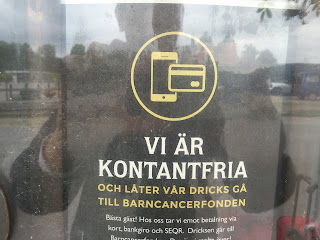
Can you imagine a cash-free society? Few countries are moving so fast in this direction as Sweden. I enjoyed the recent article in the NY Times about this matter, In Sweden, a Cash-Free Future Nears .   The article highlights that "Bills and coins now represent just 2% of Sweden’s economy, compared with 7.7% in the United States and 10% in the Euro-area" "We are cash-free", as I saw in a Hotel in Sweden Although many people speak in favor of electronic payments, they are not free from risks such as privacy concerns, potencial Internet crimes and difficulties for older people to adapt to the new methods of payment. It is funny, at the very end of the article, an example is given about somebody who stops at a hot-dog stand and the card reader does not work. I experienced exactly the same situation this summer in hot-dog stand in Stockholm. I was lucky to have some cash with me...

HeForShe

I like the idea of involving men in the gender diversity iniciatives as the HeForShe  movement does. As I watched the speech of Emma Watson  presenting this program in the United Nations, I was thinking that she is fully right when she says that "we need everyone on board". If you want to join the movement, it is simple, you just have to click on "I am HeForShe ", then enter your name, email and country. Afterwards you can share if you feel like it.

Women on boards: UK Davies report

The 2015 Davies report about gender diversity in UK boards increased the voluntary target for women at the biggest British companies to 33% by 2020, raising the previous objective of 25% by 2015. I attach the link to the full  Davies report 2015 . According to the results, the voluntary approach in the UK seems to be working. As the report highlights, "Women’s representation on FTSE 100 boards now stands at 23.5%, almost double where we started at 12.5% in 2011. Furthermore, for the first time in the history of the London Stock Exchange, there are no all-male boards in the FTSE 100". Against this background, there is a still a lively debate on the need for quotas and the possibility to broaden diversity beyond just gender. Who is in the lead? Norway and Sweden are the countries with the highest proportion of females in the boards if we look at the main stock markets (35% in Norway´s OBX and 32,6% in Stockholm´s OMX 30). Please see  The Guardian on Davies...

Parental leave in Sweden

I just read the new study from the McKinsey Global Institute about gender parity. It stresses how advancing women’s equality can add $12 trillion to global growth - How advancing women’s equality can add $12 trillion to global growth The analysis calculates a Gender Parity Score (GPS) with  metrics such as "legal protection and political voice" or "e ssential services and enablers of economic opportunity" to rank the different countries. The report highlights that Parity tends to increase with per capita Gross Domestic Product and that Scandinavian countries rank specially high .  For instance, female p articipation rates in the labour market are amongst the highest levels in Denmark, Norway and Sweden. In the case of Sweden, current regulation provides for 480 days of parental leave with benefits, with 60 days reserved specifically for each parent. An interesting study if you are curious about this matter. If you want to read more about why...

A survey about women networks

I have been contacted to participate in a survey about the impact of women networks.  I completed the survey in aprox. 10 minutes. If you want to take the survey the link is  Link to women networks survey .  I do have experience in diversity networks in general, and gender specific networks in particular. The study focuses not only on how to build a network but also how to ensure that "the programs live up to the members expectations". From a design point of view, I believe one of the key success factors for these kind of gender iniciatives is to include both women and men in the scope of the project. I take this opportunity to wish Lisa and Veronika  good luck in their research! PD. Feel free to share with your human resources community if you feel like it

¿Qué significa el verbo "vabba" en el mercado laboral sueco?

Se ha convertido en un verbo de uso frecuente en el mundo laboral sueco, pero ¿qué significa VAB o el verbo que deriva de este término "vabba"? Pues realmente son la iniciales de " Vård Av Barn", es decir, cuidado de hijos (enfermos se entiende). En el artículo  Trabajar para vivir en el planeta sueco  del diario El País de Ana Carbajosa se explica de una forma muy cercana la naturalidad con la que se utiliza este término en Suecia. Además, el artículo tiene otras interesantes perspectivas sobre un mercado laboral diferente al español. Me ha dado algunas ideas, y por eso lo comparto.